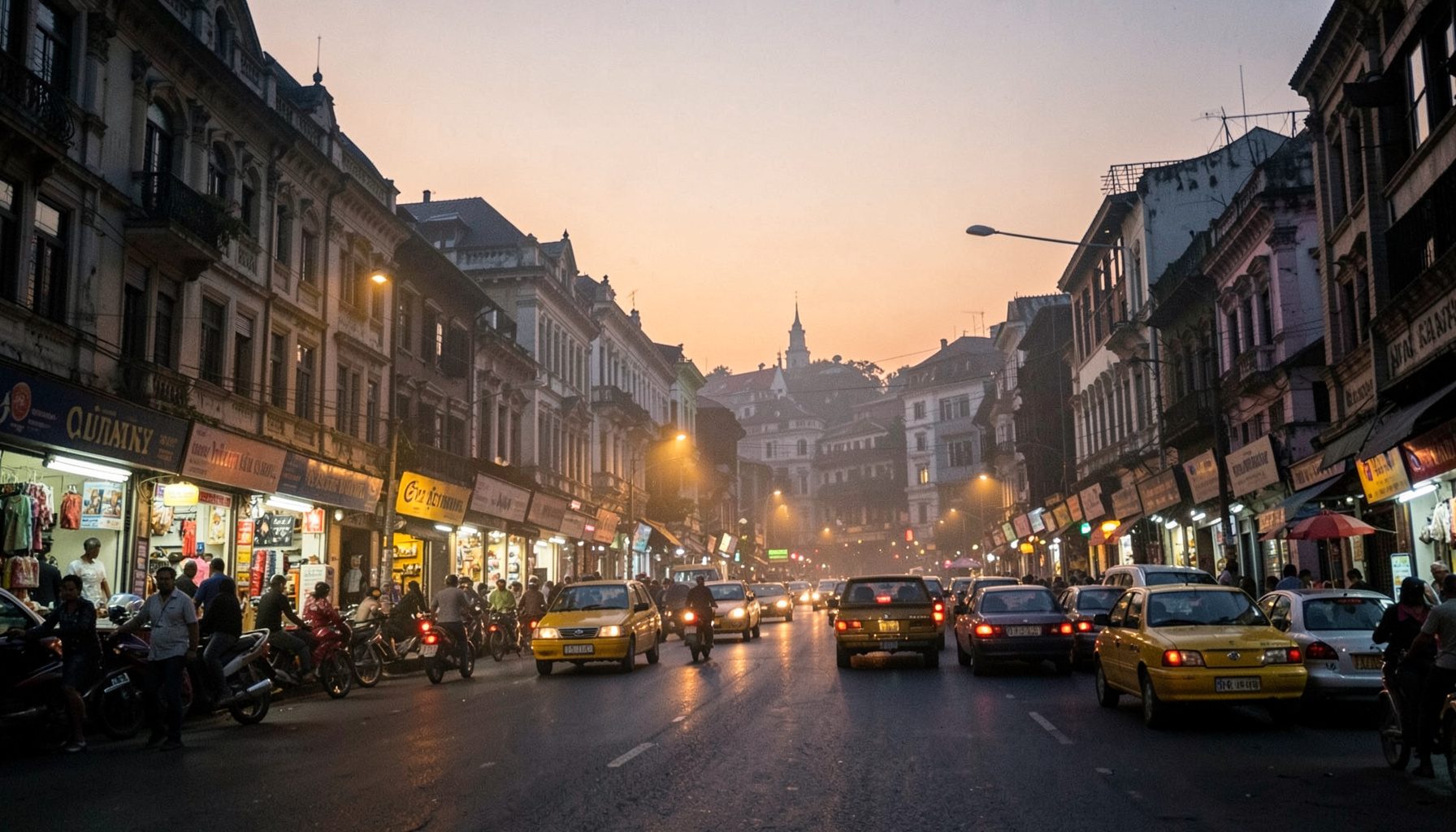
Calcutta, the capital of West Bengal, stands as a city where colonial heritage meets modern Indian life. The streets laid out during the British era still carry the royal architecture of a bygone age, from the grand buildings along the Maidan to the historic churches and stone monuments that dot the cityscape. Founded by Job Charnock, the city grew from a small trading post into a bustling metropolis that remains the cultural heart of eastern India. Today, its thoroughfares are filled with buses, taxis, and the iconic yellow ambassador cars that have become synonymous with Kolkata's streets. The city's character is defined by its blend of old and new, where trams still run alongside modern metro rail services.
Healthcare services across Kolkata are extensive, with numerous hospitals, nursing homes, and cardiac care units serving residents and visitors alike. The city maintains a network of emergency services including ambulances and health clinics that operate throughout the metropolitan area. Medical facilities range from large public institutions to specialized private clinics, ensuring that comprehensive healthcare is accessible across different neighbourhoods. Public health initiatives continue to address the needs of a growing urban population, while medical colleges train the next generation of healthcare professionals. The city's healthcare infrastructure remains a vital component of daily life, supporting the wellbeing of millions who call Kolkata home.
Banking and financial services in Kolkata are well-established, with numerous banks, ATMs, and foreign exchange offices spread across the city. The commercial heart of West Bengal, Kolkata houses the offices of major financial institutions alongside local cooperative banks that serve communities at the grassroots level. Business districts buzz with activity as trade and commerce drive the local economy. From securing trade licenses to managing foreign communication, the city provides the infrastructure necessary for both domestic and international business operations. The presence of consulates and trade offices further cements Kolkata's position as a key economic centre in eastern India.
Education has long been a cornerstone of Kolkata's identity, with the city hosting prestigious colleges, schools, and the renowned National Library. The city's academic institutions have produced generations of scholars, artists, and leaders who have shaped the nation's intellectual landscape. Schools across Kolkata provide education from primary through secondary levels, while colleges and universities offer advanced studies across diverse disciplines. The city's libraries serve as repositories of knowledge, preserving rare manuscripts and modern texts alike. This educational ecosystem continues to thrive, supported by a culture that places high value on learning and intellectual achievement.
Public utilities and civic services in Kolkata are managed by the municipal corporation and various government agencies that ensure the city functions smoothly. Electricity supply, LPG distribution, and water services form the backbone of urban infrastructure, while public transportation including buses, metro rail, and the suburban railway network connect different parts of the metropolis. The city maintains police stations, fire services, and emergency helplines to ensure public safety. Cyber cafes, mobile offices, and communication services keep residents connected in an increasingly digital world. Tourist information centres and guest houses provide support for visitors exploring the cultural riches of this historic city.